Programs

Every stage deserves its own kind of wonder.

A connected learning journey from infancy through Pre-K, using research-informed planning and selected Montessori- and Reggio-inspired practices at each stage.

Pre-opening note

The examples below describe Wrencrest’s planned structure. Specific materials and implementation will be refined before opening.

01 / A responsive beginning

Infants

Individual planning, not a one-size-fits-all pace

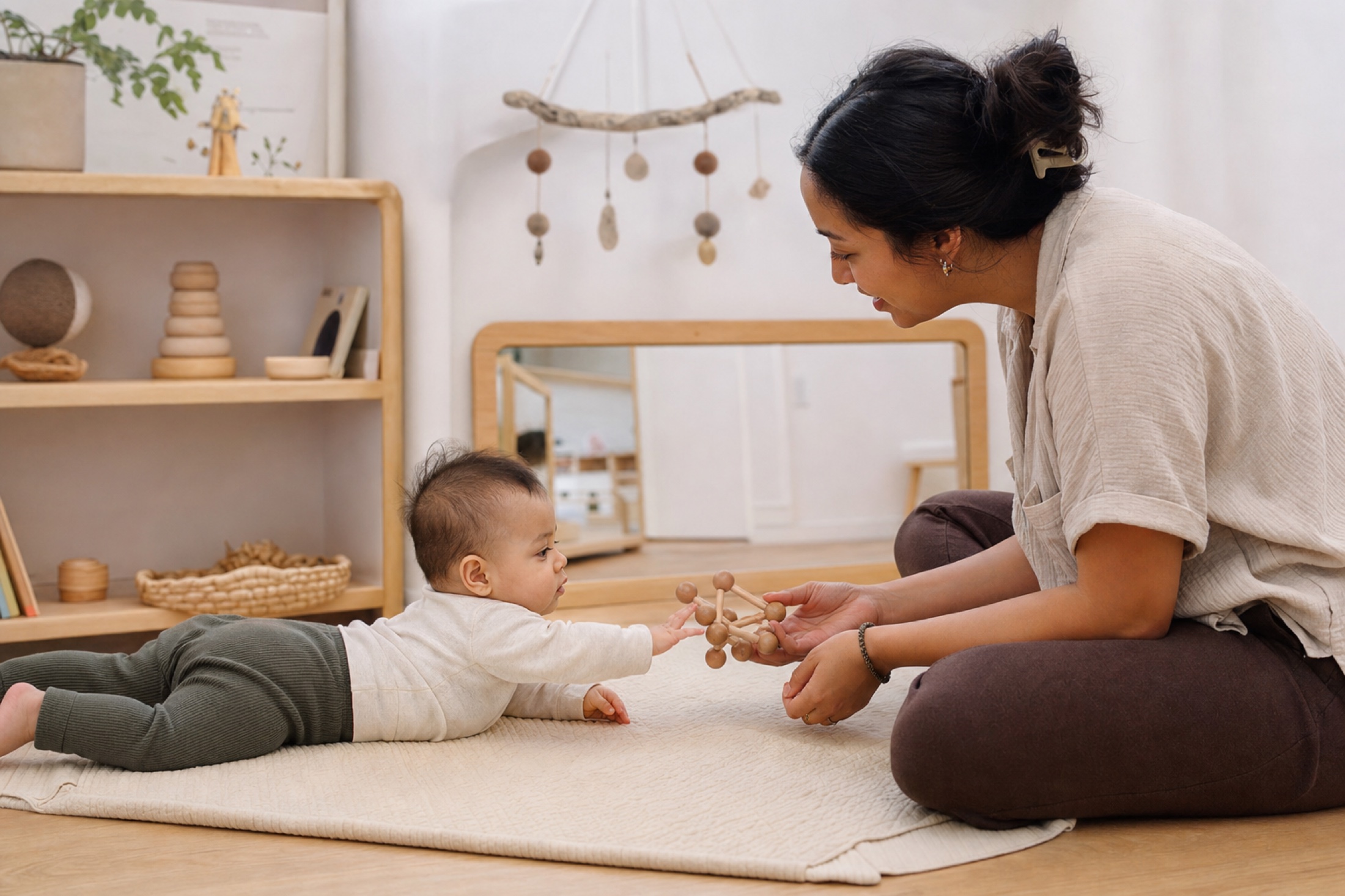
An educator responding attentively as an infant reaches for a natural wooden grasping toy in a prepared environment

Care follows each infant’s cues while trusted educators create calm opportunities for connection, movement, language, and sensory discovery.

  • Secure relationships
  • Early communication
  • Sensory exploration
  • Movement

How the approach may look

  • Responsive caregiving shaped by close observation
  • Simple, reachable materials in an uncluttered environment
  • Unhurried sensory and movement experiences

02 / Growing agency

Toddlers

Individual planning, not a one-size-fits-all pace

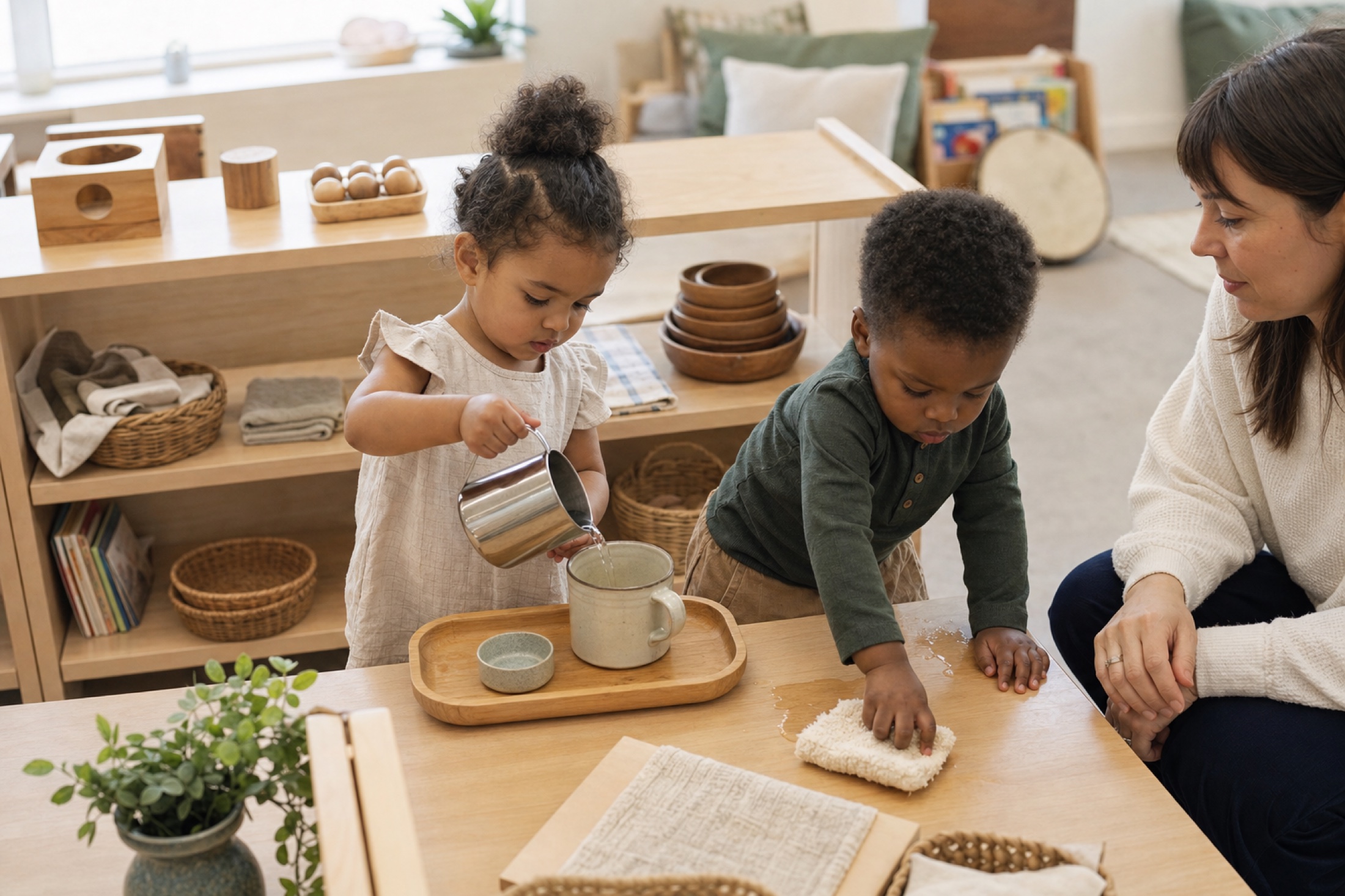
Toddlers practicing pouring and wiping with an educator nearby in a calm practical-life station

Toddlers learn through doing. Predictable rhythms, open-ended materials, and patient guidance help them make choices, express needs, and practice being with others.

  • Language
  • Independence
  • Motor confidence
  • Early friendships

How the approach may look

  • Practical-life routines and developmentally appropriate choices
  • Language-rich guidance for needs, feelings, and relationships
  • Short inquiries that begin with repeated interests

03 / Ideas in motion

Preschool

Individual planning, not a one-size-fits-all pace

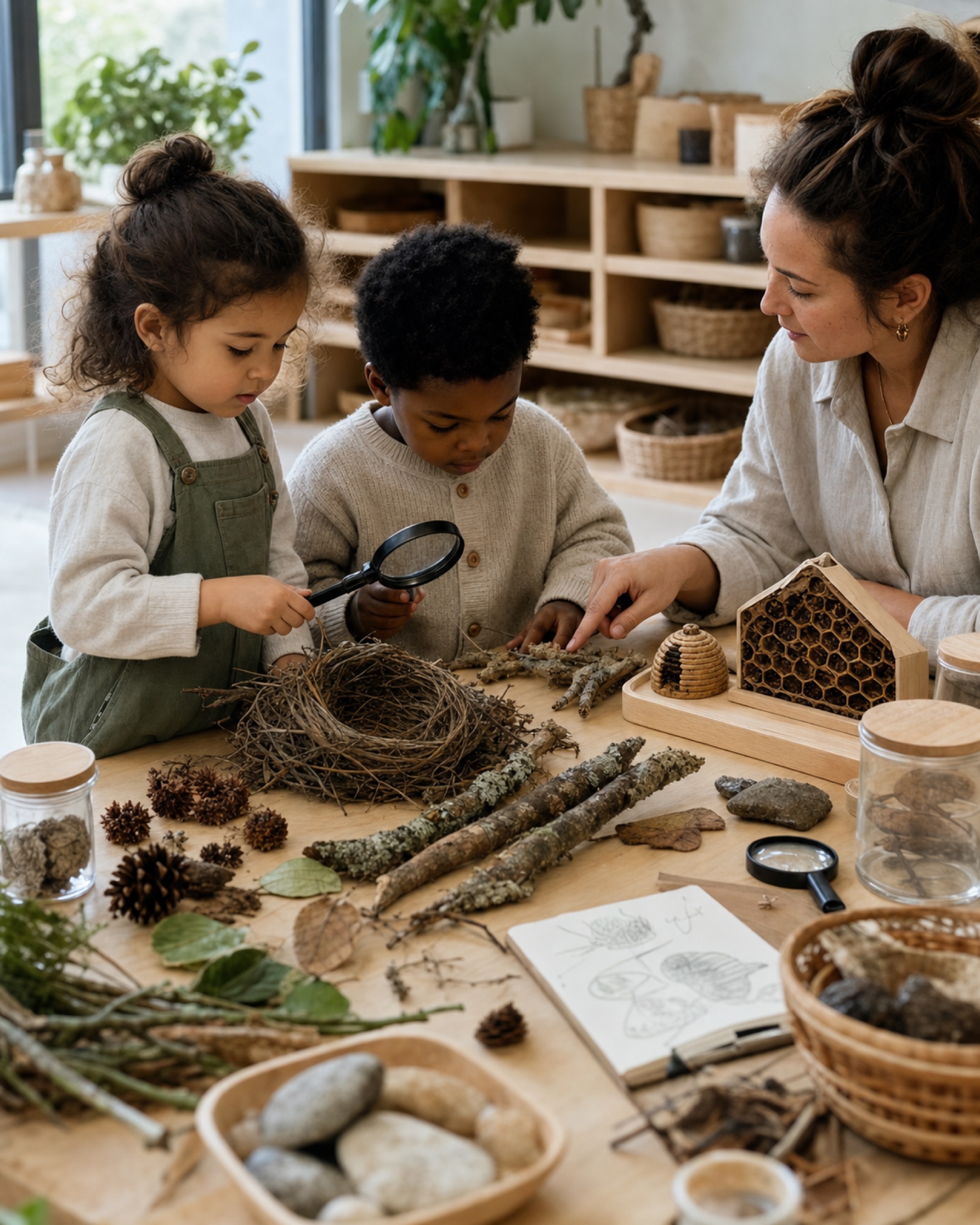
Children and an educator examining a found nest, branches, stones, seed pods, and a wooden honeycomb model

Questions become projects as children investigate stories, patterns, nature, art, building, and the social work of a classroom community.

  • Curiosity
  • Creative thinking
  • Early literacy
  • Collaboration

How the approach may look

  • Projects developed from children’s questions
  • Drawing, building, movement, and storytelling as thinking tools
  • Learning documentation that makes growth visible

04 / Ready to participate

Pre-K

Individual planning, not a one-size-fits-all pace

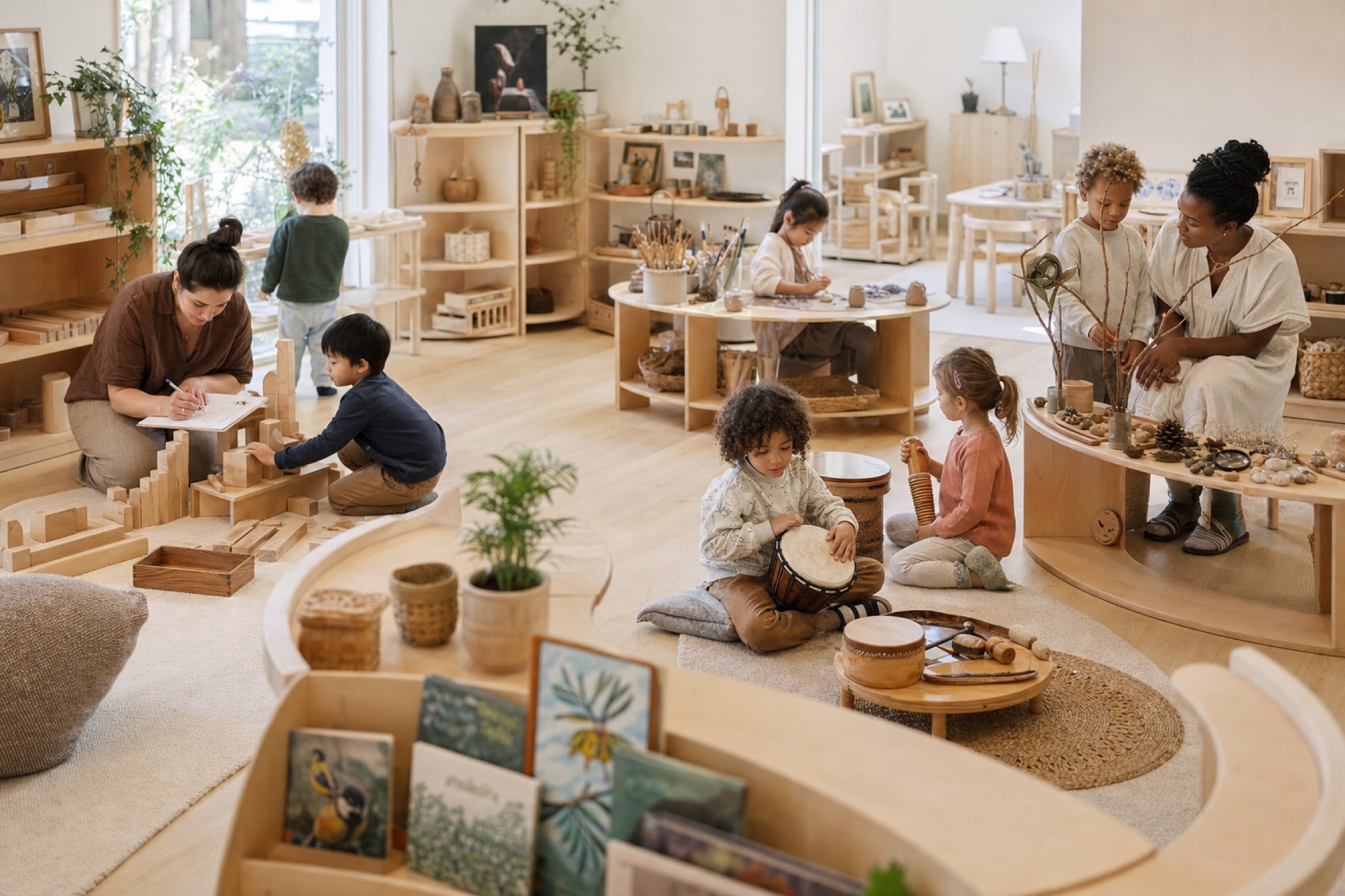
Children and educators participating independently across connected wooden construction, art, music, and nature stations

Pre-K experiences bring together language, early mathematics, problem solving, self-regulation, and collaboration—supporting confident participation in kindergarten.

  • Problem solving
  • Self-regulation
  • Early academics
  • Community skills

How the approach may look

  • Longer collaborative investigations and reflection
  • Classroom responsibilities that build agency
  • Intentional planning for participation in kindergarten

Observe. Plan. Invite. Reflect.

The next step starts with knowing the child.

Educators notice what a child is trying, what holds their attention, and where support could open a new possibility. Those observations inform materials, routines, projects, and family conversations without turning childhood into a checklist.

Founding Families

Find the program that can grow with you.

Join the Founding Families Waitlist to receive future updates about the planned Philadelphia location.