
Relationships first
Feel safe, known, and connected.
Our Philosophy
Warm relationships, purposeful play, inquiry, and creative expression help children grow as capable learners. Educators build on each child’s strengths and interests, with clear developmental goals.
At Wrencrest, we believe children arrive ready to connect, question, create, explore, and contribute.
Our educational philosophy combines warm relationships, purposeful play, inquiry, creative expression, thoughtfully designed environments, and responsive teaching. Educators get to know each child, their strengths, interests, culture, relationships, and ways of communicating, and use that knowledge to create meaningful opportunities for growth.
Our View of the Child
We build on every child’s strengths through relationships, meaningful play, many forms of expression, and responsive teaching.
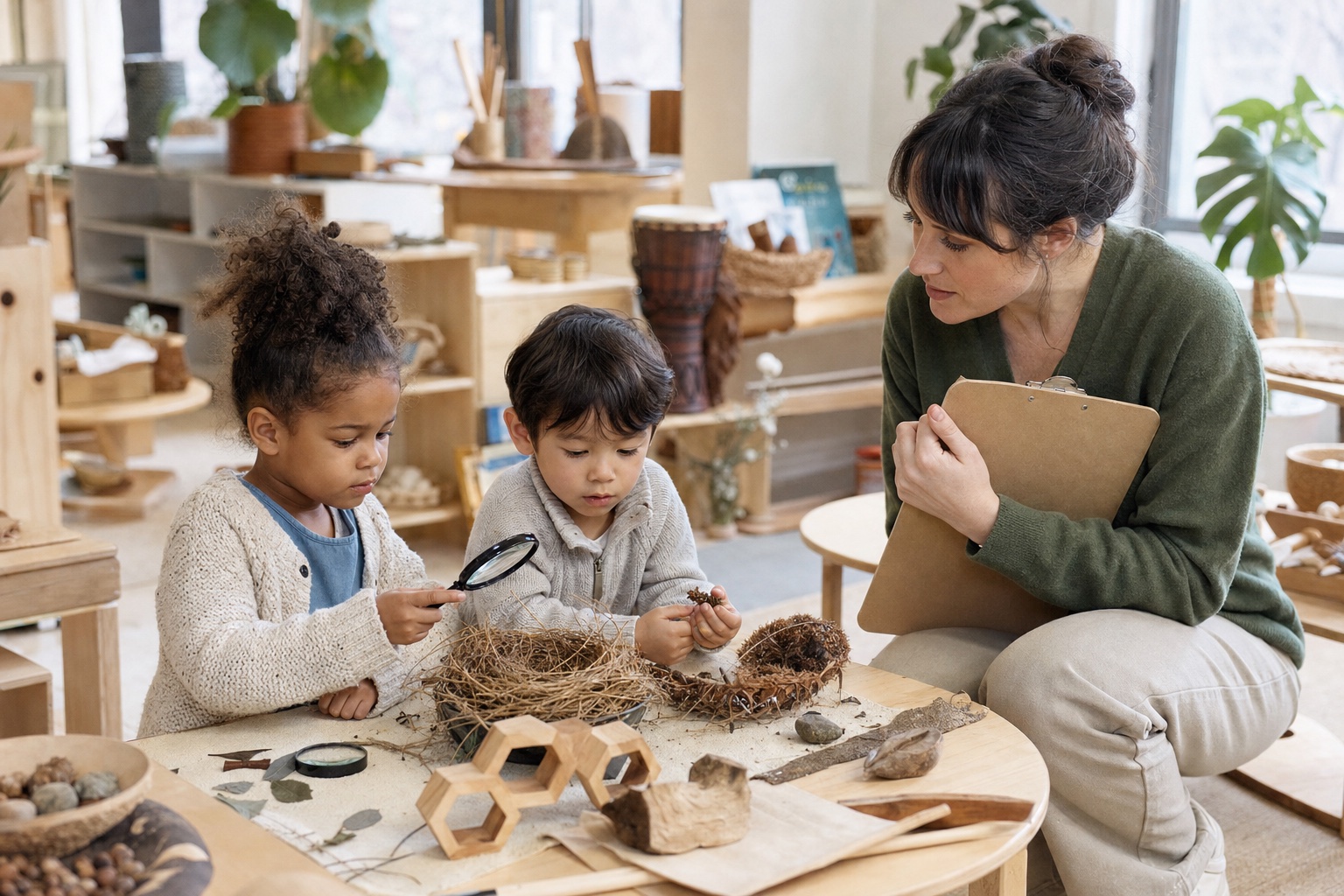
Feel safe, known, and connected.
Test ideas and solve problems.
Speak, draw, build, move, and sing.
Combine careful observation with clear learning goals.
We plan around who your child already is — their relationships, strengths, interests, and how they express themselves.
Every question gets room to grow — through projects, conversation, play, and hands-on investigation.
Kids don’t just talk about ideas — they draw them, build them, move them, and turn them into music and stories.
Kids learn to share, empathize, stand up for what’s fair, and bounce back from hard moments — every single day.
Young children are already observing, wondering, communicating, building relationships, testing ideas, solving problems, and making meaning from the world around them.
Each child brings strengths, experiences, cultural knowledge, ideas, and unique ways of participating to the classroom.
We notice those capabilities, nurture them, and create conditions in which they can grow.
Four ideas guide our work.
Children learn best when they feel safe, known, loved, and connected. Strong relationships with educators, peers, families, and community provide the foundation for exploration and growth.
Through meaningful play, children develop language, test theories, negotiate roles, solve problems, practice self-regulation, take perspectives, and turn imagination into understanding.
An idea can be spoken, drawn, built, moved, counted, acted out, investigated, or sung. Children need multiple ways to explore ideas and demonstrate what they understand.
Educators bring professional knowledge and clear learning goals while paying close attention to what children say, do, wonder about, and need next.
Our Educational Framework
Children investigate questions, express ideas in different ways, and practice independence with support. Reggio Emilia and Montessori traditions inform our broader, research-informed framework.
Children’s questions begin deeper investigations.
Ideas grow through art, movement, stories, and construction.
Reachable materials and practical routines support participation.
Wrencrest does not claim certified Reggio Emilia or Montessori status or complete implementation of either approach.
When kids trust the adults around them, they explore more, speak up more, and take the kind of risks that lead to real growth.
We listen to what kids are curious about, then build activities that turn that curiosity into real learning.
Photos, notes, and your child’s own words help us — and you — see exactly how they’re growing, and what’s next.
Wrencrest’s educational framework is informed by current early childhood research and inspired by ideas and practices from the Reggio Emilia and Montessori traditions.
Children's questions, interests, conversations, and discoveries can become starting points for deeper investigation.
Educators listen for ideas worth pursuing and connect them with meaningful opportunities in language, literacy, mathematics, science, social-emotional development, movement, the arts, and other areas of learning.
Children help influence the direction of an investigation. Educators remain responsible for ensuring appropriate breadth, challenge, safety, access, and developmental goals.
Children often understand an idea more deeply when they encounter it in different forms.
They might draw an observation, construct a model, dictate a story, measure an object, move their bodies, create music, work with clay, or revisit an idea through dramatic play.
Creative expression helps young children think, communicate, and learn.
Wrencrest also draws from Montessori-inspired practices that encourage meaningful independence and the nurturance of the soul and heart of the child. We take inspiration from Montessori’s philosophy that the child has an inner guiding light or life (a soul) propelling their development which requires adults to be responsive and to create the ideal environment within which the child can take initiative and pursue independence and self-regulation. This approach means that the child is born with innate qualities and capacities that need nurturance to flourish.
Children encounter reachable materials, orderly environments, purposeful choices, practical routines, opportunities to care for themselves, and age-appropriate responsibility for shared spaces.
The goal is not independence for its own sake, but a growing sense of:
“I can take part. I can try. I can help.”
Wrencrest does not present itself as a certified Reggio Emilia or Montessori program or claim complete implementation of either approach. These traditions help inform a broader framework designed specifically for the children and families we serve.
How Learning Happens
Educators notice what children are exploring, plan a thoughtful next step, and return to their ideas as understanding grows.
Notice
Educators pay close attention to children's words, gestures, questions, relationships, strategies, repeated interests, and moments of uncertainty.
Educators create rich conditions for learning: trusted relationships, interesting materials, time to investigate, meaningful conversation, and challenges that extend children's thinking.
Planning is intentional, but it is also flexible. What a child does next provides information about what the educator might offer next.
Learning therefore becomes a continuing conversation between children, educators, materials, environments, and ideas.
A Connected, Whole-Child Curriculum
A single block project can connect mathematics, language, creativity, coordination, and collaboration. Explore the areas of development we support together.
Children build trusting relationships, recognize and communicate feelings, navigate conflict, recover from difficulty, develop self-regulation, and learn how to participate in a group.
Conversation, books, storytelling, songs, dramatic play, drawing, mark-making, and early writing help children communicate and make meaning.
Children encounter quantity, pattern, shape, measurement, sequence, comparison, spatial relationships, and early mathematical reasoning through play, routines, construction, and investigation.
Children observe, predict, test, compare, collect, classify, ask questions, care for living things, and investigate how the world works.
Drawing, painting, clay, music, movement, construction, dramatic play, and storytelling provide different ways to develop, represent, and communicate ideas.
Daily movement, outdoor experiences, self-care routines, and hands-on work support coordination, strength, body awareness, confidence, and physical well-being.
Children encounter classrooms in which their families, identities, and cultures are respected while developing empathy, fairness, responsibility, cooperation, and a sense of belonging.
Curiosity, initiative, concentration, flexible thinking, persistence, problem-solving, reflection, and willingness to try grow through meaningful challenges.
Select an area to see how it connects with everyday learning.
Young children do not experience learning as a collection of separate school subjects.
Building a bridge with blocks, for example, can involve mathematics, language, engineering, collaboration, physical coordination, creativity, persistence, and problem-solving at the same time.
Wrencrest therefore approaches curriculum as interconnected while intentionally supporting development across important domains.
The Environment as a Teacher
Reachable materials, purposeful choices, and space for movement or quiet work help children participate with confidence.
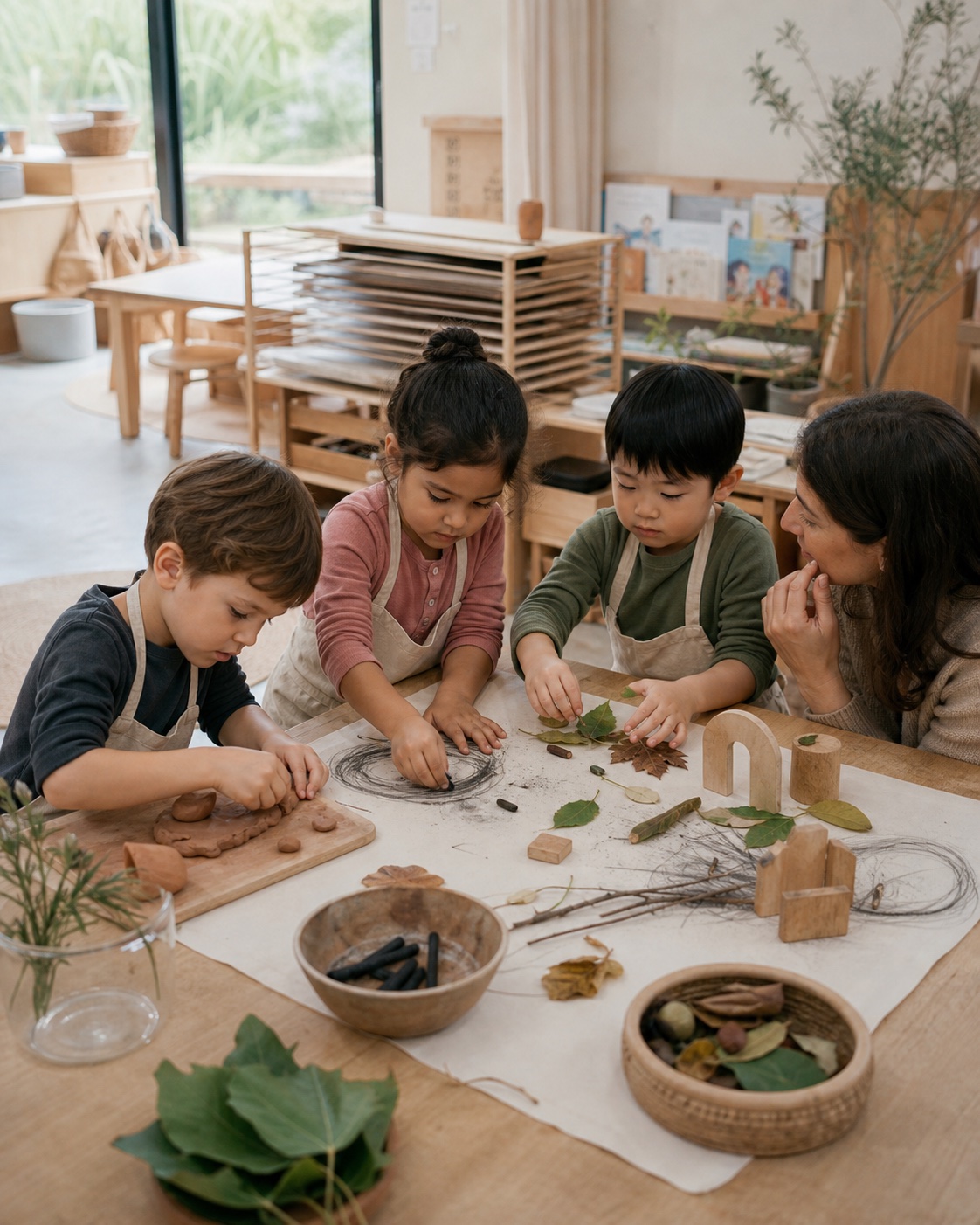
At Wrencrest, the classroom environment is part of the educational experience.
Thoughtfully arranged spaces invite children to make choices, find materials, collaborate, concentrate, investigate, create, move, rest, and participate in the life of the classroom.
Books, tools, natural materials, art media, construction pieces, objects for investigation, and everyday materials are organized so children can see possibilities and increasingly use them independently.
Learning does not have to remain in one classroom “center.” An idea that begins with a book might move into drawing, dramatic play, construction, music, nature exploration, mathematics, or a group investigation.
Children need different kinds of spaces at different moments. Environments should support energetic movement, collaboration, focused individual work, conversation, care routines, quiet reflection, rest, and emotional regulation.
The Role of the Educator
Educators balance children’s initiative with purposeful teaching: observing, listening, designing experiences, and reflecting on learning.
Notice strategies, strengths, relationships, and interests.
Take children’s questions, experiences, and theories seriously.
Shape materials, routines, questions, and experiences with intention.
Review evidence with colleagues and families, then adjust plans.
Wrencrest educators are active participants in children's learning, but their role is not simply to deliver information.
They observe, listen, question, design, support, document, and reflect.
As observers, educators notice children's strategies, interests, relationships, strengths, and current ways of participating.
As listeners, they take children's questions, experiences, and theories seriously.
As designers, they thoughtfully shape time, spaces, materials, routines, questions, experiences, and groupings.
As reflective practitioners, they examine evidence of children's learning, collaborate with colleagues and families, and adjust plans based on what they observe.
This creates a balance between child agency and strong professional teaching.
Learning in Action
A fallen nest discovered on a neighborhood walk can open a shared investigation across science, language, mathematics, art, and movement.
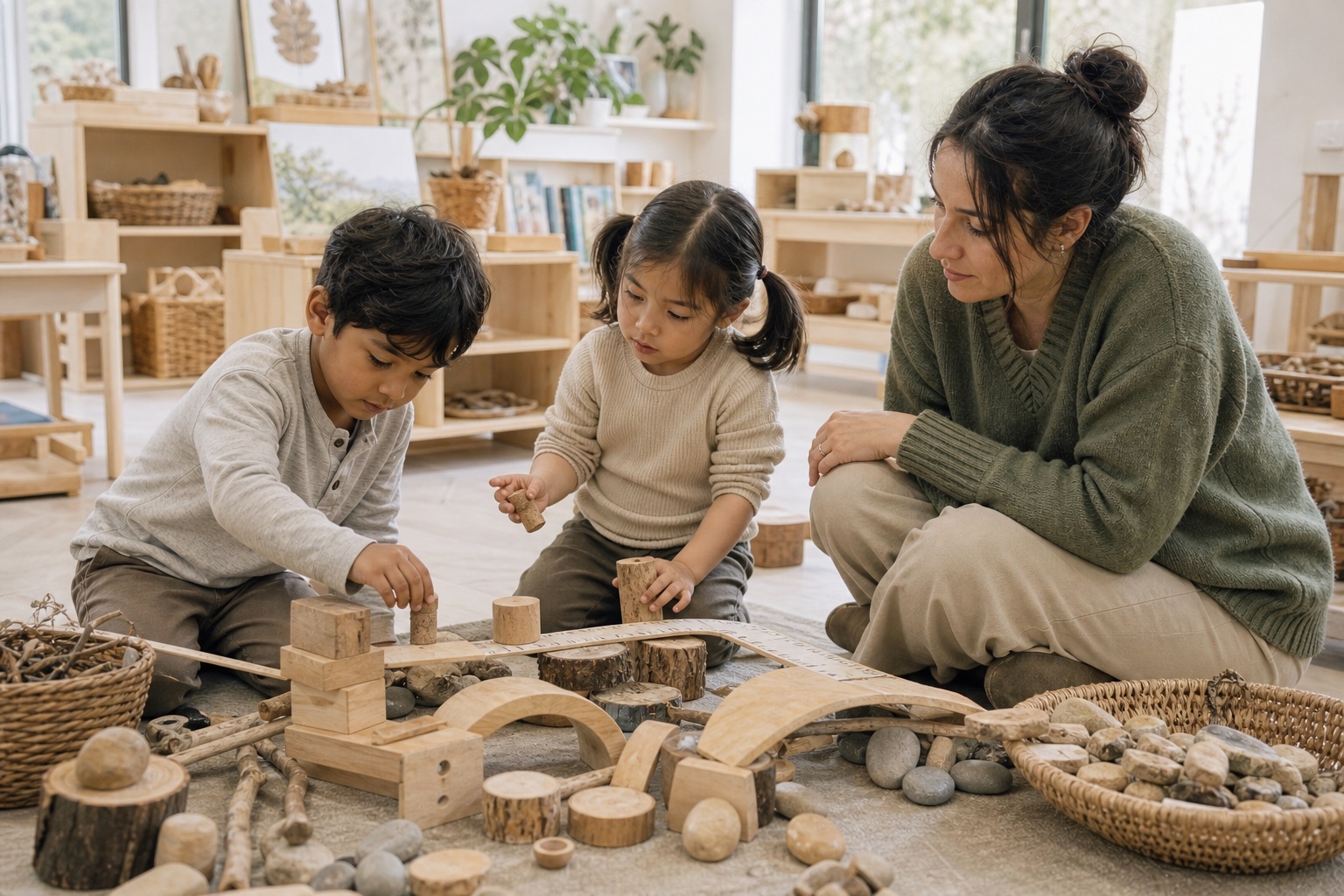
Children find a fallen nest.
How was it built? What holds it together?
Draw, compare, count, build, and test natural materials.
Revisit photographs, words, and changing theories together.
Imagine children discovering a fallen bird's nest during a neighborhood walk.
They begin asking questions:
How did the bird build it? What holds it together? What was it made from? Who lived there?
The educator notices their curiosity and brings the investigation back into the classroom.
Children examine natural materials. They draw the nest. They compare sticks and fibers. They count materials. They construct their own nests. They tell stories about birds. They test which materials bend or break. They move like birds, examine local species, and discuss habitats.
Educators document children's words, photographs, constructions, drawings, questions, and changing theories.
One discovery has now opened opportunities for science, mathematics, language, literacy, art, movement, collaboration, engineering, and care for the natural world.
The project might eventually move in another direction—to weather, local birds, habitats, architecture, or caring for neighborhood nature.
That is what inquiry can look like at Wrencrest: children's curiosity provides a meaningful beginning, and skillful educators help it grow.
Social-Emotional Life, Character & Community
Children practice understanding feelings, navigating disagreements, caring for others, and contributing to a shared community.
Children develop language for feelings, needs, boundaries, calming strategies, conflict, and repair.
Qualities such as kindness, courage, fairness, responsibility, honesty, empathy, and care are explored through real situations and everyday choices rather than treated only as abstract lessons.
Children should see their identities, families, experiences, and cultures treated with respect and learn that communities can make room for different abilities, perspectives, and strengths.
Age-appropriate classroom roles, routines, choices, and responsibilities allow children to experience themselves as meaningful contributors to their community.
Academic learning is only one part of early childhood.
Children are also learning how to understand themselves, communicate their needs, live with others, solve disagreements, contribute to a community, and make choices that affect other people.
Making Learning Visible
Children’s words, photographs, drawings, and models reveal how their thinking changes—not just what they made.
Revisit experiences and recognize how ideas have changed.
Understand thinking and plan meaningful next steps.
See what your child is investigating, practicing, and learning.
A finished painting or construction tells only part of the story.
Learning documentation can bring together children's words, photographs, drawings, models, observations, questions, and educator reflection to show how thinking develops over time.
Documentation helps children revisit experiences and recognize how their ideas have changed.
It helps educators understand children's thinking and plan meaningful next steps.
And it helps families see not only what their child made, but what their child was investigating, practicing, wondering about, and learning.
Standards and Professional Foundations
Our developing curriculum draws on early childhood research, recognized guidance, and Pennsylvania’s age-appropriate learning standards.
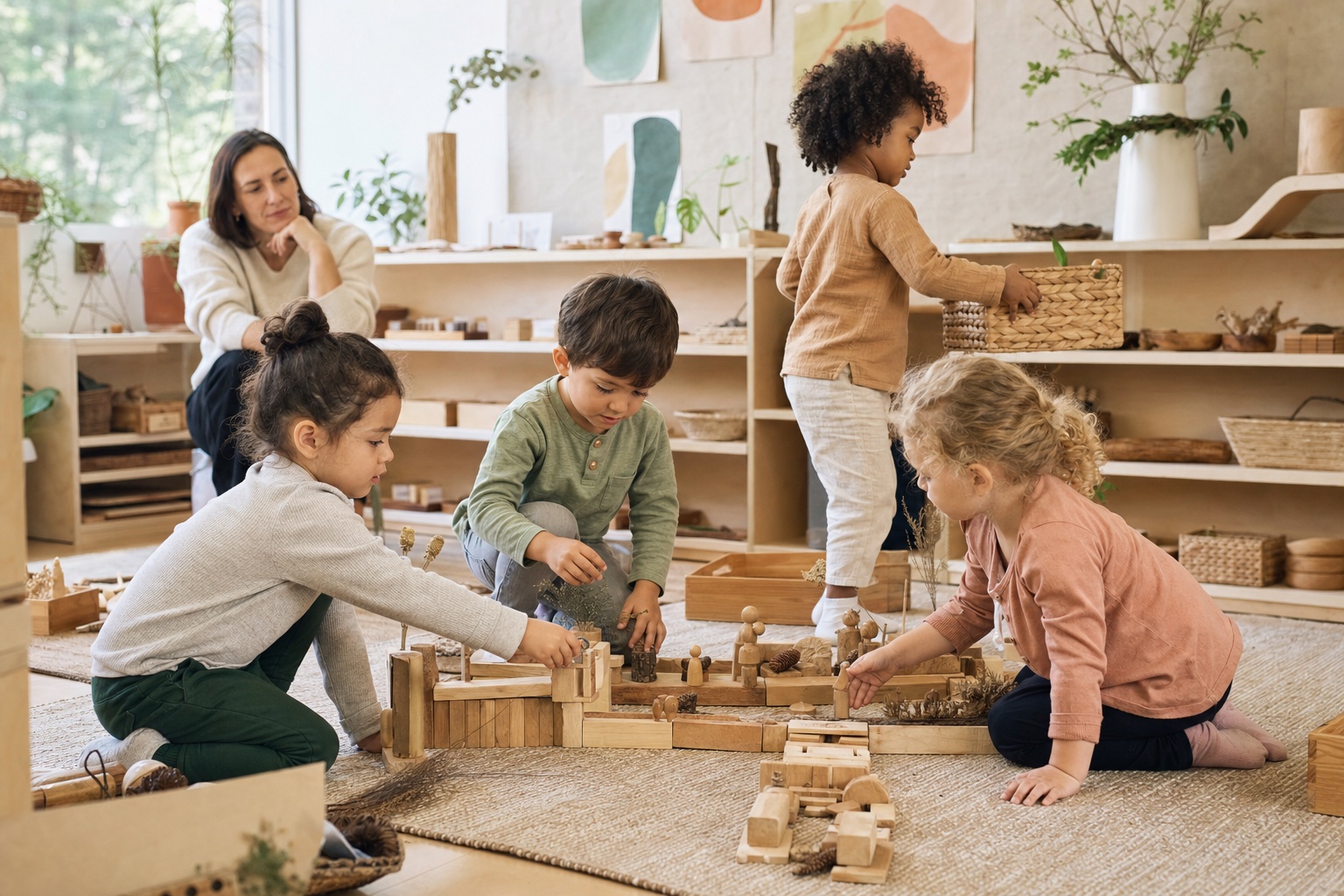
Wrencrest is developing its curriculum with reference to recognized early childhood guidance, current research, and Pennsylvania's age-appropriate learning standards.
Developmental goals and standards help educators maintain appropriate breadth and intentionality while recognizing that children may reach those goals in different ways and at different rates.
As Wrencrest prepares to open, final curriculum selections, licensing requirements, quality-rating participation, accreditation pathways, and any formal partnerships will be announced after decisions and approvals are complete.
Founding Families
Every child's learning journey is different. Our work begins by getting to know the child in front of us—and building from there.