
Our approach
A thoughtful structure for following the child.
Research-informed practice gives educators a disciplined way to notice, plan, invite, and reflect—while responsive care keeps each child safe, known, and ready to explore.
Wrencrest draws from selected Montessori- and Reggio-inspired practices rather than claiming a complete implementation of either philosophy.
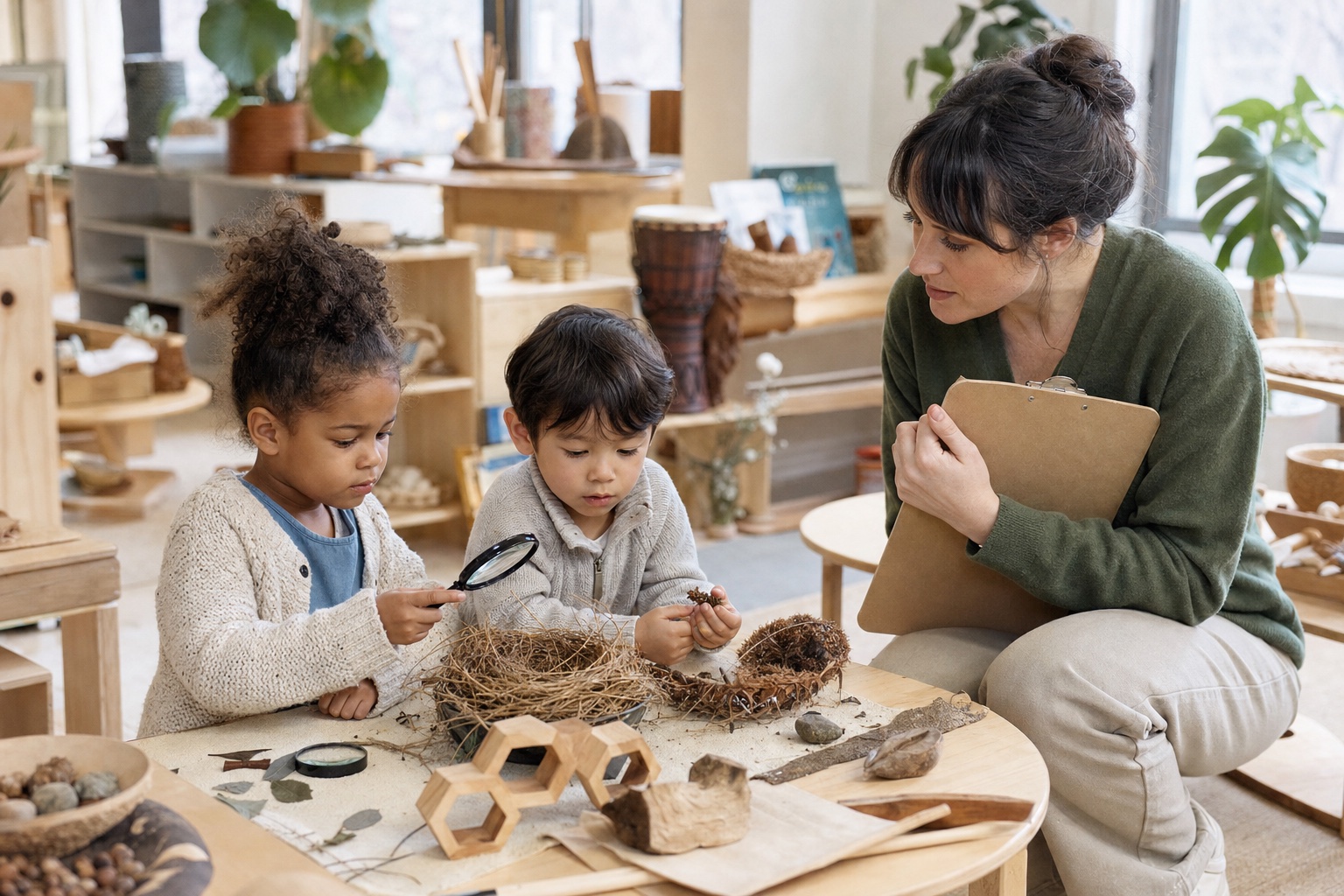
Research-informed practice
Careful observation, useful next steps.
Rather than move every child through the same activity in the same way, educators pay attention to what children are doing and use those observations to make intentional planning decisions.
The planning cycle
Observe. Plan. Invite. Reflect.
Observe
Notice how a child communicates, solves problems, joins play, handles routines, and approaches new ideas.
Plan
Choose an intentional next step based on the child’s strengths, interests, and current needs.
Invite
Arrange materials, questions, routines, or a project that makes the next step possible.
Reflect
Document what happened, listen again, and use the child’s response to shape what comes next.
Montessori-inspired independence
“Help me do it myself.”
Children gain agency when their environment makes meaningful participation possible.
Prepared for participation
Materials are visible and reachable, with clear places and purposes that help children choose and return what they use.
Practical routines
Care of self, classroom jobs, transitions, and everyday responsibilities become real opportunities to practice independence.
Choice with boundaries
Children make developmentally appropriate choices within a steady rhythm and a community that considers others.
Reggio-inspired inquiry
Ideas can be spoken, drawn, built, moved, and revised.
Children’s questions can become shared projects. Educators revisit those questions through rich materials, conversation, documentation, and many forms of expression.
- Longer investigations
- Expressive materials
- Collaborative meaning-making
- Learning documentation
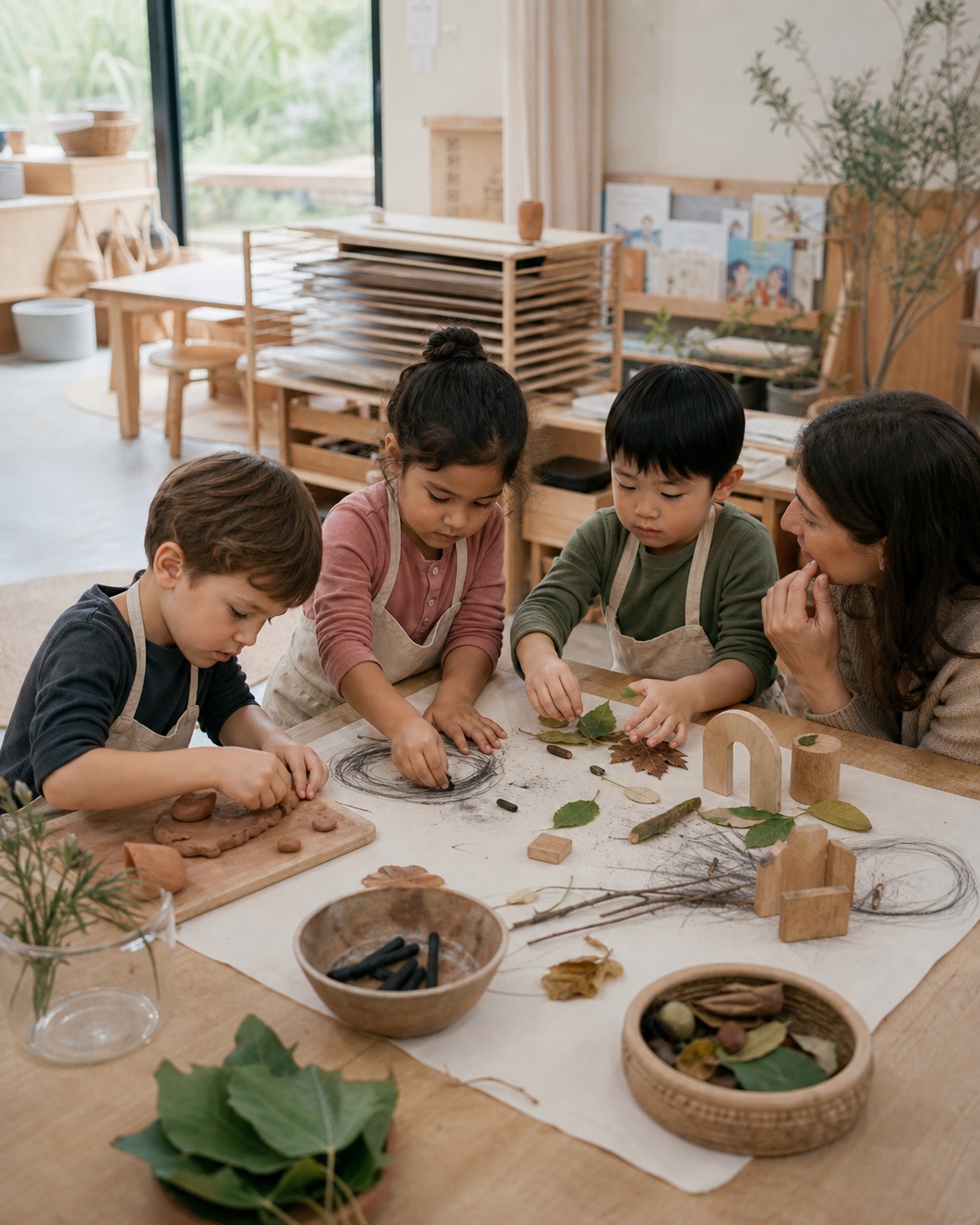
What readiness means here
More than knowing answers. Ready to engage.
Kindergarten readiness includes language and early concepts, but also curiosity, persistence, independence, problem solving, and the ability to learn with others. No single method owns those goals; our structure keeps them connected.
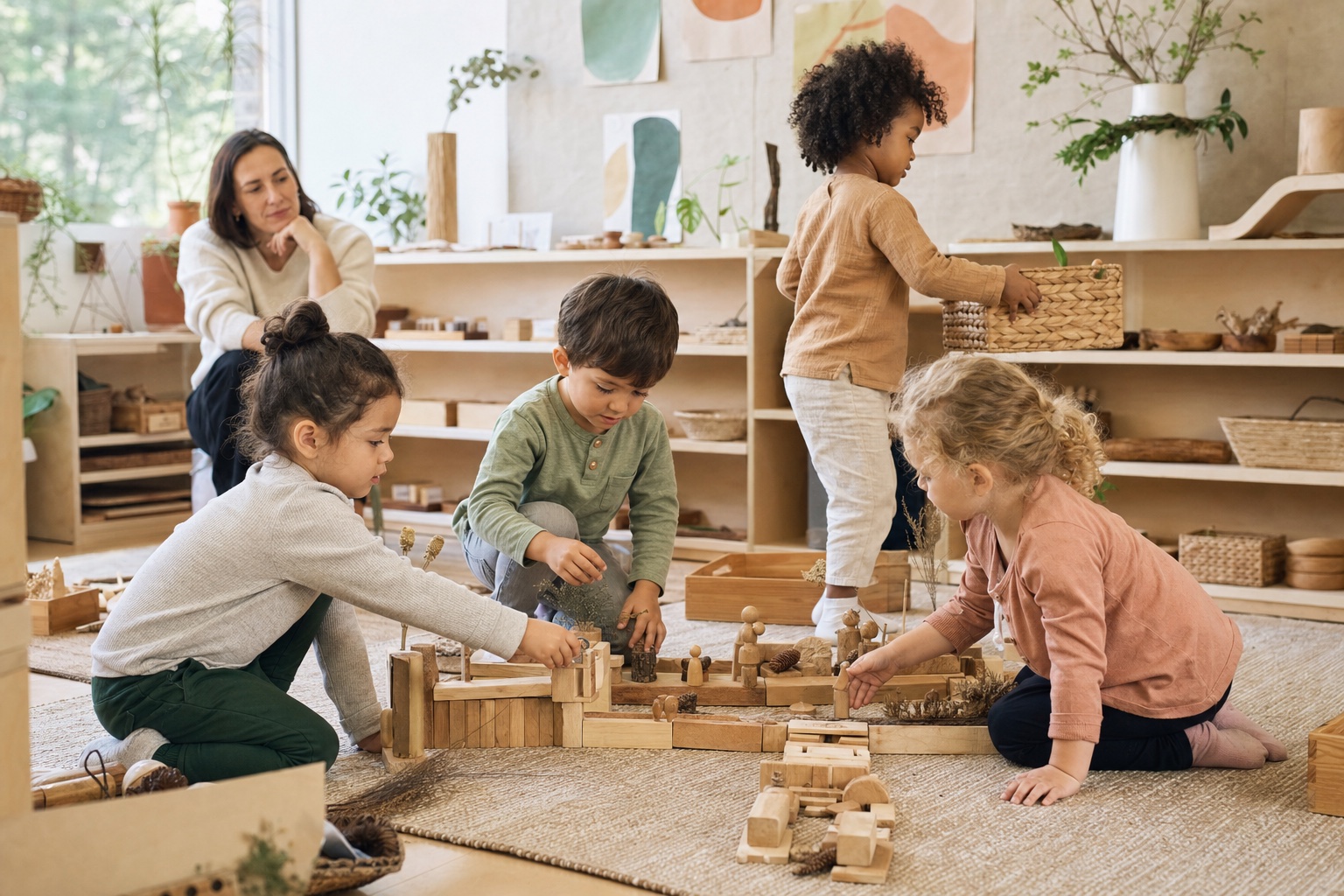
Founding Families
Begin with a conversation.
Join the Founding Families Waitlist to receive future updates about the planned Philadelphia location.